%20--%3e%3cdefs%3e%3cstyle%3e%20.st0%20{%20fill:%20none;%20}%20.st1%20{%20fill:%20%23bc601c;%20}%20.st2%20{%20fill:%20%23e4e1dc;%20}%20.st3%20{%20fill:%20%231e384b;%20}%20%3c/style%3e%3c/defs%3e%3cg%3e%3cpath%20class='st3'%20d='M281.13,268.65c-71.62,0-143.94-5.46-221.08-16.7l-15.83-2.31-4.09-15.47c-14.67-55.48-14.67-114.14,0-169.63l4.09-15.47,15.83-2.3c77.14-11.24,149.45-16.7,221.08-16.7s143.94,5.46,221.08,16.7l15.83,2.3,4.09,15.47c14.67,55.49,14.67,114.15,0,169.63l-4.09,15.47-15.83,2.3c-77.14,11.24-149.45,16.7-221.08,16.7Z'/%3e%3cg%3e%3cpath%20class='st2'%20d='M509.98,67.76l-1.97-7.44-7.61-1.11c-151.64-22.09-286.89-22.09-438.53,0l-7.61,1.11-1.97,7.44c-14.11,53.39-14.11,109.82,0,163.2l1.97,7.44,7.61,1.11c75.82,11.05,147.55,16.57,219.27,16.57s143.45-5.52,219.27-16.57l7.61-1.11,1.97-7.44c14.12-53.38,14.12-109.82,0-163.2Z'/%3e%3cg%3e%3cpath%20class='st1'%20d='M498.72,70.74c-150.45-21.92-284.73-21.92-435.18,0-13.62,51.53-13.62,105.72,0,157.25,150.45,21.92,284.73,21.92,435.18,0,13.62-51.52,13.62-105.73,0-157.25Z'/%3e%3cg%3e%3cpath%20class='st2'%20d='M104.98,92.61h22.53v93.83h27.07l-3.33,19.67h-46.28v-113.5Z'/%3e%3cpath%20class='st2'%20d='M166.72,92.61h50.31l3.33,19.34h-30.94v27.41h26.06v19h-26.06v28.42h30.94l-3.33,19.34h-50.31v-113.5Z'/%3e%3cpath%20class='st2'%20d='M300.91,92.61l-23.88,113.5h-22.36l-23.71-113.5h23.71l11.43,77.18,12.61-77.18h22.2Z'/%3e%3cpath%20class='st2'%20d='M375.57,168.73v24.6c0,7.9-5.55,13.45-13.45,13.45h-35.82c-7.73,0-13.28-5.55-13.28-13.45v-87.77c0-8.07,5.55-13.62,13.28-13.62h35.82c7.9,0,13.45,5.55,13.45,13.62v24.1l-22.7,4.99v-21.52c0-1.01-.67-1.85-1.18-1.85h-14.46c-.84,0-1.51.84-1.51,1.85v72.47c0,1.01.67,1.68,1.51,1.68h14.12c.84,0,1.51-.67,1.51-1.68v-21.86l22.7,4.99Z'/%3e%3cpath%20class='st2'%20d='M445.01,91.94c7.23,0,12.28,5.04,12.28,12.28v90.13c0,7.23-5.04,12.28-12.28,12.28h-39.68c-7.4,0-12.27-5.04-12.27-12.28v-90.13c0-7.23,4.88-12.28,12.27-12.28h39.68ZM434.59,112.79c0-1.01-.84-1.85-1.35-1.85h-16.31c-.84,0-1.18,1.18-1.18,1.85v72.98c0,.67.51,1.51,1.18,1.51h16.31c.51,0,1.35-.67,1.35-1.51v-72.98Z'/%3e%3c/g%3e%3c/g%3e%3c/g%3e%3c/g%3e%3crect%20class='st0'%20x='-2.18'%20width='568.09'%20height='297.76'/%3e%3c/svg%3e)
We’re Levco — a 4th‑generation, family‑owned Connecticut heating oil, propane and HVAC company serving Fairfield and New Haven counties since 1980. Below is a quick, local guide to the propane tank options we install in CT, plus what to consider about placement, permits, buying vs leasing, and safety.
PROPANE
The right tank for your home.
Above-ground or underground. Owned or leased. We help you pick what fits — then handle permits, placement, and inspection.
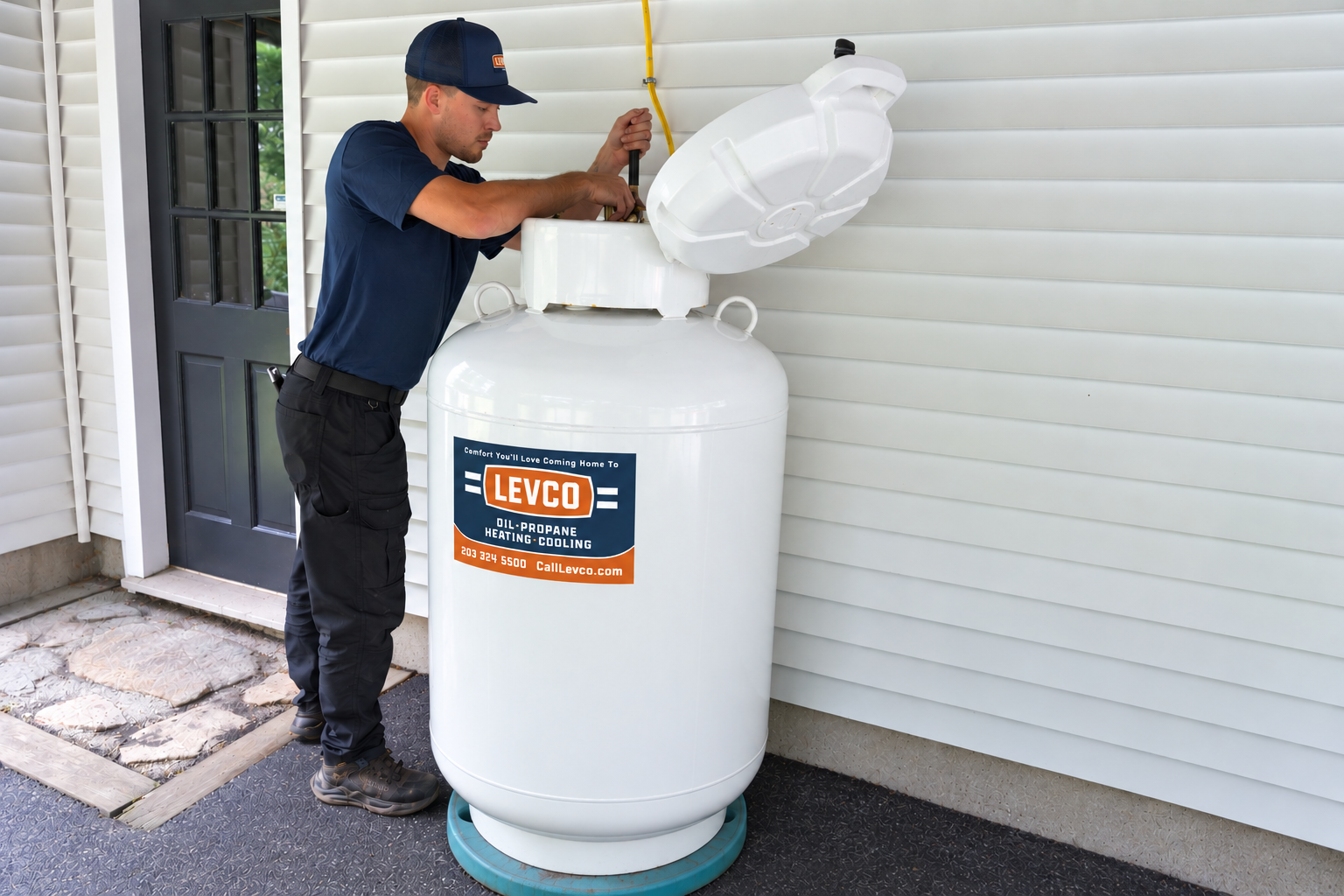
BEFORE YOU DECIDE
We install propane tanks from 120 to 1,000 gallons, above ground or buried. The right one comes down to which appliances run on propane, how much of your heating load it carries, and how often you need a truck in the driveway. Underground tanks keep the yard clear but require additional site preparation and corrosion protection, so we assess all options before recommending a solution.
Key takeaways
- 120 to 1,000 gallons, above-ground or underground
- Sized by appliance load, not by square footage
- Placement follows Connecticut setback rules and NFPA 58
- Tanks are filled to 80% by design, leaving room for expansion
TANK SIZES
Find the right size.
100 lb cylinders
Cooking, single appliance, occasional use.
120–250 gallon
One or two appliances — fireplace + range, or a generator.
500 gallon
Whole-home heating in mid-sized homes.
1,000 gallon
Large homes, pool heaters, or whole-home + standby generator.
Get help picking the right tank.
Talk with a local Levco team member about fuel, service, or equipment for your home.
LEARN MORE
More about this service
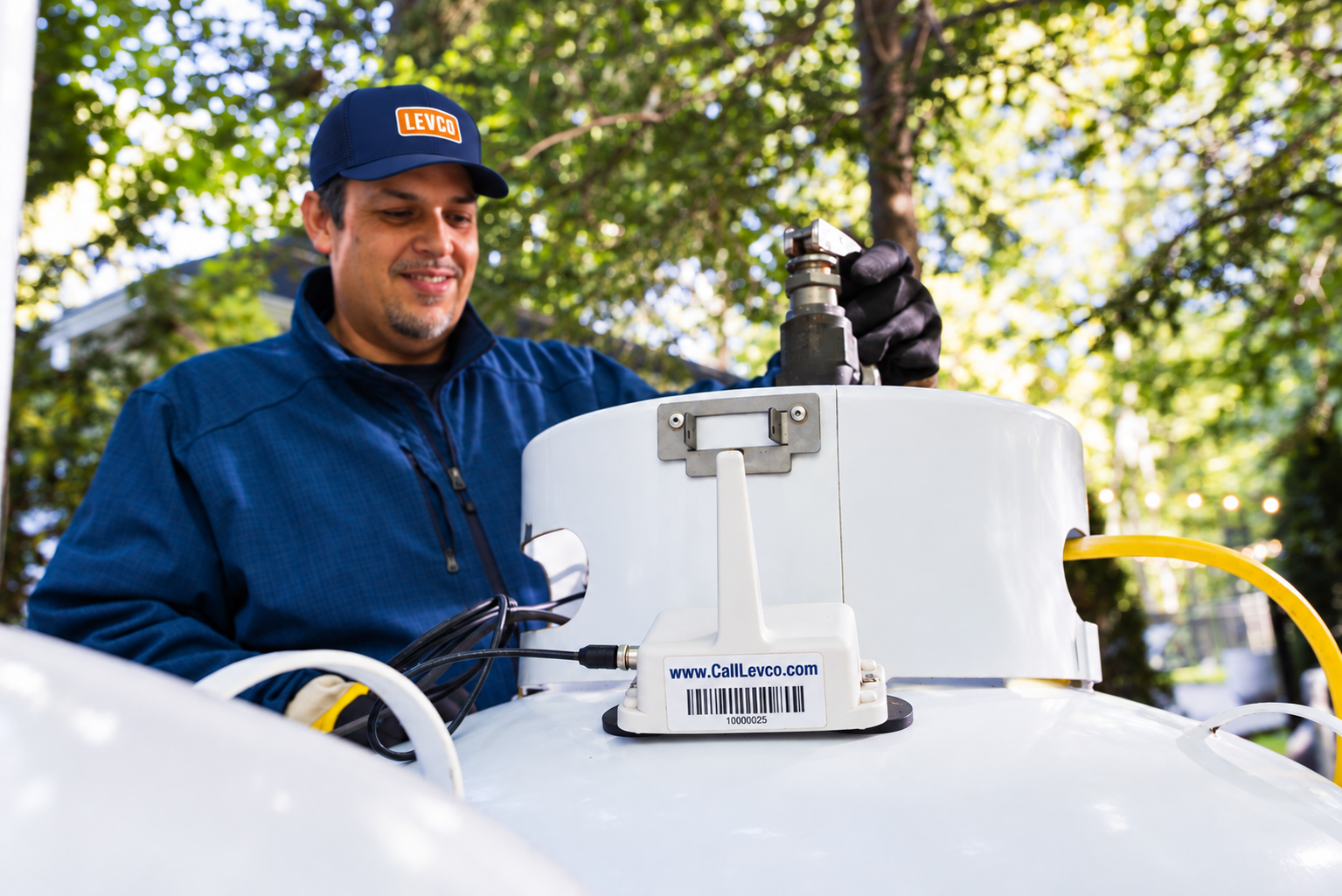
Which tank size is right for your property?
Sizes we install
These are common sizes we install and can evaluate for your property:
- 120 gallonBest for small homes, seasonal cottages, gas ranges, water heaters, or supplemental appliances. Good for light use and limited space.
- 250 gallonTypical for smaller year‑round homes or two‑appliance setups (heat + hot water) with moderate use.
- 500 gallonA frequent choice for whole‑house heating along with hot water and cooking, depending on connected load and usage.
- 1,000 gallonFor large homes, estates, multiple appliances, pools, or whole‑house standby generators where extended run time is required.
Quick decision guide
- Small apartment or single appliance: 120 gal
- Modest single‑family home: 250 gal
- Whole‑house heating, hot water and cooking: 500 gal
- Large home, backup generator, pool: 1,000 gal
Sizing depends on connected load, appliance usage, how often you want refills, property constraints, and applicable code — so treat the list above as a starting point, not a recommendation. If you’re unsure, we’ll run a load estimate based on your heating system, appliance set, and usage patterns. Call (203) 533-8249 to talk through what fits your home.
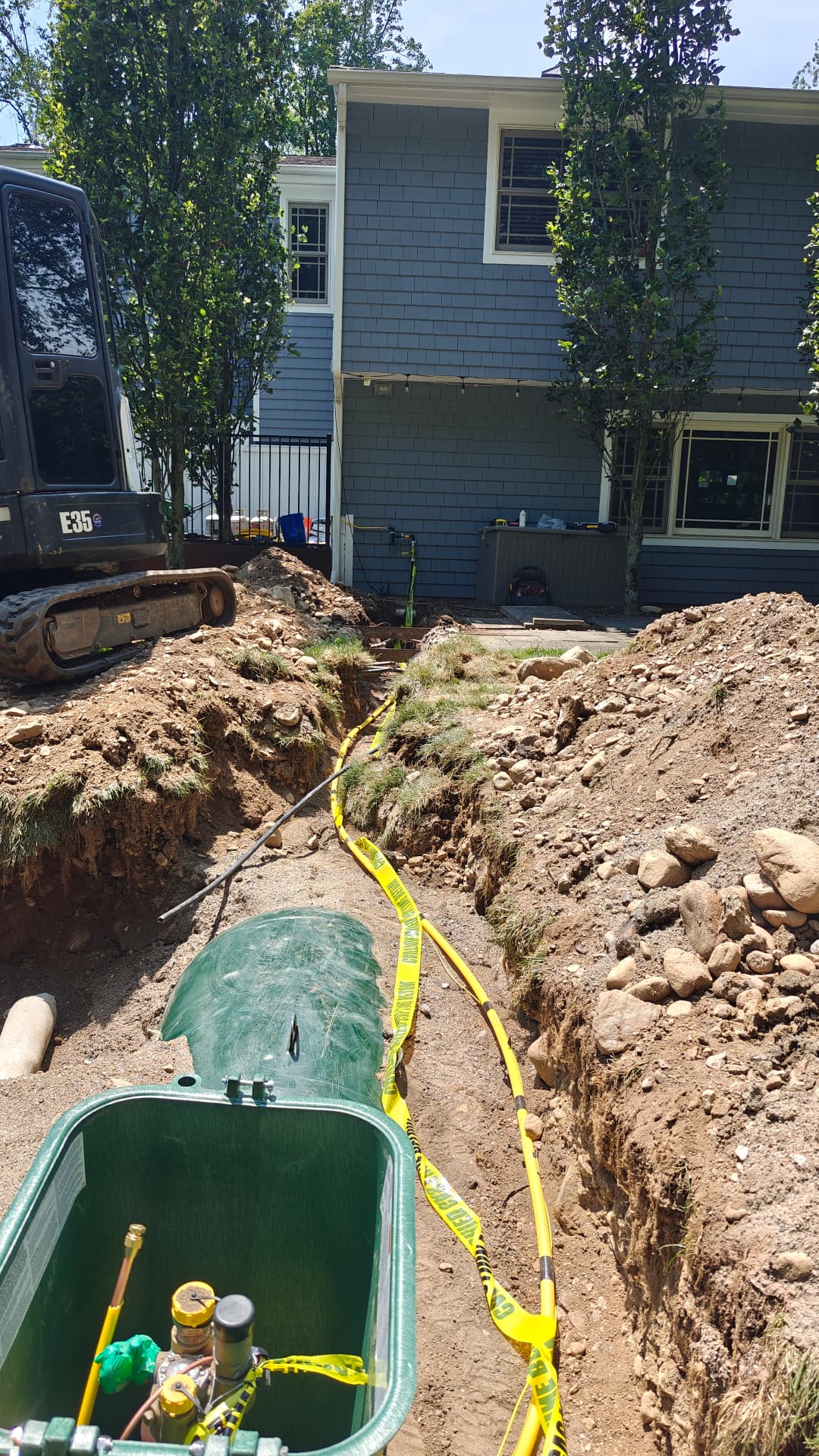
Above‑ground vs underground tanks
Above-ground tanks
Above-ground tanks are easier to inspect, maintain, and access for delivery. We plan a tidy location that works with your property.
Underground tanks
Underground tanks preserve sight lines but require additional site preparation, corrosion protection, and long-term access planning.
We’ll compare placement, access, upkeep, and project scope with you, then manage the approved process from planning through final inspection.

Lease vs buy: make the choice that fits your situation
When leasing makes sense
- You want low or no upfront cost.
- You’re renting or plan to move in a few years.
- You prefer the supplier to handle maintenance. Lease programs may include maintenance and certain tank repairs or replacements; exact coverage depends on the lease terms.
When buying is better
- You plan to stay in the home long‑term and want to build equity.
- You prefer owning the asset and controlling resale value.
- You have specific placement or tank type needs that require customization.
Levco handles both lease arrangements and outright sales and will explain long‑term cost comparisons for your specific usage. Ask us for a personalized estimate — get a quote or call (203) 533-8249.
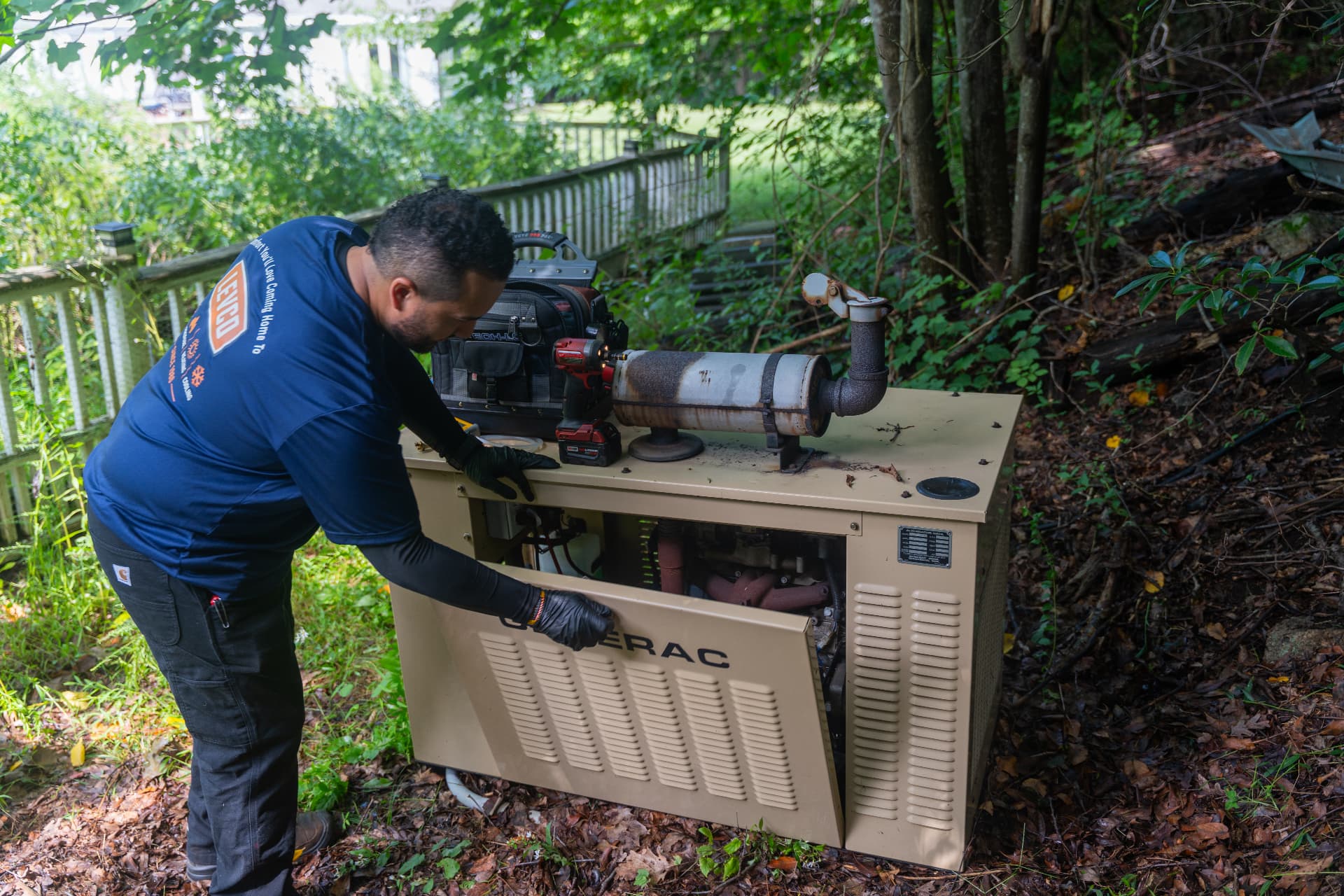
Sizing for heat, hot water, generator, pool and cooking
How we size tanks
We size tanks by looking at:
- Your home’s heating load and fuel consumption (BTU/year)
- Number and type of appliances: furnace, boiler, water heater, range, dryer
- Extra loads: standby generator runtime, pool heater capacity
- Seasonal usage patterns and insulation/efficiency of your home
Typical examples
- Cooking and small hot water demand only: 100–120 gal
- Heating + hot water for a well‑insulated 1,200–2,000 sq ft house: 250–500 gal
- Heating + hot water + whole‑house generator or pool heater: 500–1,000 gal
We’ll do the math for you so you’re not guessing. Get a quote and we’ll provide a recommended tank size based on your exact needs.
Permits, placement codes, and safety inspections
Permits and placement
Tank size and property layout determine the required clearances. We plan the placement around your home, property lines, ignition sources, delivery access, and applicable NFPA 58 and local requirements.
We manage the installation process, including required permits, inspections, site preparation, placement, and the protection appropriate for the approved tank location.
Safety inspection
At installation, we inspect the tank, regulator, connections, and gas lines, complete required leak and safety checks, and show you the shutoff.
Start with photos of your property. In most cases, our Comfort Advisors can plan and quote the work from those; we arrange a site visit when one is needed.
FAQ
Tank questions, answered
- Above-ground or underground?
- Above-ground tanks are easier to inspect and access. Underground tanks preserve more of the property's sight lines but require additional site preparation and corrosion protection. We'll review the property, recommend the right fit, and manage the approved process.
- Should I own or lease?
- Lease programs may include maintenance and certain tank repairs or replacements; exact coverage depends on the lease terms. Owning makes sense if you want freedom to switch suppliers without moving a tank.
- How close can a tank sit to my house?
- Required setbacks depend on tank size, placement, and applicable NFPA 58 and local requirements. We handle site layout, permitting, and inspection coordination.
- What about a buried tank under a driveway?
- It may be possible when the install is engineered and approved for the site — that means structural protection, traffic-rated covers, and venting, reviewed against local code. It is not automatic on every property.
- Can I convert from oil to propane?
- Yes. We coordinate the burner change-out, tank install, gas line, and removal of the old oil tank.
DISCOVER MORE
Your next step starts here.
Propane Delivery
Learn about reliable propane delivery and service for heating, hot water, cooking, generators, and more.
Explore Propane DeliveryPropane Tank Sizes Guide
Common sizes, placement considerations, and Connecticut requirements.
Learn morePropane Safety
Leak signs, shut-off steps, and safe tank practices.
Learn moreRequest a Free Quote
Tell us what you’re considering. We’ll help you understand your options and provide clear pricing with no pressure or obligation.
Request a QuoteHeating Oil Delivery
See how Levco keeps your home supplied with dependable automatic delivery, flexible pricing options, and local support.
Explore Heating Oil DeliveryHeating Service
Get expert repair, maintenance, and replacement support for your home’s heating system.
Explore Heating Service