%20--%3e%3cdefs%3e%3cstyle%3e%20.st0%20{%20fill:%20none;%20}%20.st1%20{%20fill:%20%23bc601c;%20}%20.st2%20{%20fill:%20%23e4e1dc;%20}%20.st3%20{%20fill:%20%231e384b;%20}%20%3c/style%3e%3c/defs%3e%3cg%3e%3cpath%20class='st3'%20d='M281.13,268.65c-71.62,0-143.94-5.46-221.08-16.7l-15.83-2.31-4.09-15.47c-14.67-55.48-14.67-114.14,0-169.63l4.09-15.47,15.83-2.3c77.14-11.24,149.45-16.7,221.08-16.7s143.94,5.46,221.08,16.7l15.83,2.3,4.09,15.47c14.67,55.49,14.67,114.15,0,169.63l-4.09,15.47-15.83,2.3c-77.14,11.24-149.45,16.7-221.08,16.7Z'/%3e%3cg%3e%3cpath%20class='st2'%20d='M509.98,67.76l-1.97-7.44-7.61-1.11c-151.64-22.09-286.89-22.09-438.53,0l-7.61,1.11-1.97,7.44c-14.11,53.39-14.11,109.82,0,163.2l1.97,7.44,7.61,1.11c75.82,11.05,147.55,16.57,219.27,16.57s143.45-5.52,219.27-16.57l7.61-1.11,1.97-7.44c14.12-53.38,14.12-109.82,0-163.2Z'/%3e%3cg%3e%3cpath%20class='st1'%20d='M498.72,70.74c-150.45-21.92-284.73-21.92-435.18,0-13.62,51.53-13.62,105.72,0,157.25,150.45,21.92,284.73,21.92,435.18,0,13.62-51.52,13.62-105.73,0-157.25Z'/%3e%3cg%3e%3cpath%20class='st2'%20d='M104.98,92.61h22.53v93.83h27.07l-3.33,19.67h-46.28v-113.5Z'/%3e%3cpath%20class='st2'%20d='M166.72,92.61h50.31l3.33,19.34h-30.94v27.41h26.06v19h-26.06v28.42h30.94l-3.33,19.34h-50.31v-113.5Z'/%3e%3cpath%20class='st2'%20d='M300.91,92.61l-23.88,113.5h-22.36l-23.71-113.5h23.71l11.43,77.18,12.61-77.18h22.2Z'/%3e%3cpath%20class='st2'%20d='M375.57,168.73v24.6c0,7.9-5.55,13.45-13.45,13.45h-35.82c-7.73,0-13.28-5.55-13.28-13.45v-87.77c0-8.07,5.55-13.62,13.28-13.62h35.82c7.9,0,13.45,5.55,13.45,13.62v24.1l-22.7,4.99v-21.52c0-1.01-.67-1.85-1.18-1.85h-14.46c-.84,0-1.51.84-1.51,1.85v72.47c0,1.01.67,1.68,1.51,1.68h14.12c.84,0,1.51-.67,1.51-1.68v-21.86l22.7,4.99Z'/%3e%3cpath%20class='st2'%20d='M445.01,91.94c7.23,0,12.28,5.04,12.28,12.28v90.13c0,7.23-5.04,12.28-12.28,12.28h-39.68c-7.4,0-12.27-5.04-12.27-12.28v-90.13c0-7.23,4.88-12.28,12.27-12.28h39.68ZM434.59,112.79c0-1.01-.84-1.85-1.35-1.85h-16.31c-.84,0-1.18,1.18-1.18,1.85v72.98c0,.67.51,1.51,1.18,1.51h16.31c.51,0,1.35-.67,1.35-1.51v-72.98Z'/%3e%3c/g%3e%3c/g%3e%3c/g%3e%3c/g%3e%3crect%20class='st0'%20x='-2.18'%20width='568.09'%20height='297.76'/%3e%3c/svg%3e)
Choosing the right propane tank.
A practical guide to residential tank sizes, placement, and what Levco considers before recommending one for your home.

Phil says: The right tank starts with what you want propane to do today—and what you may add later.
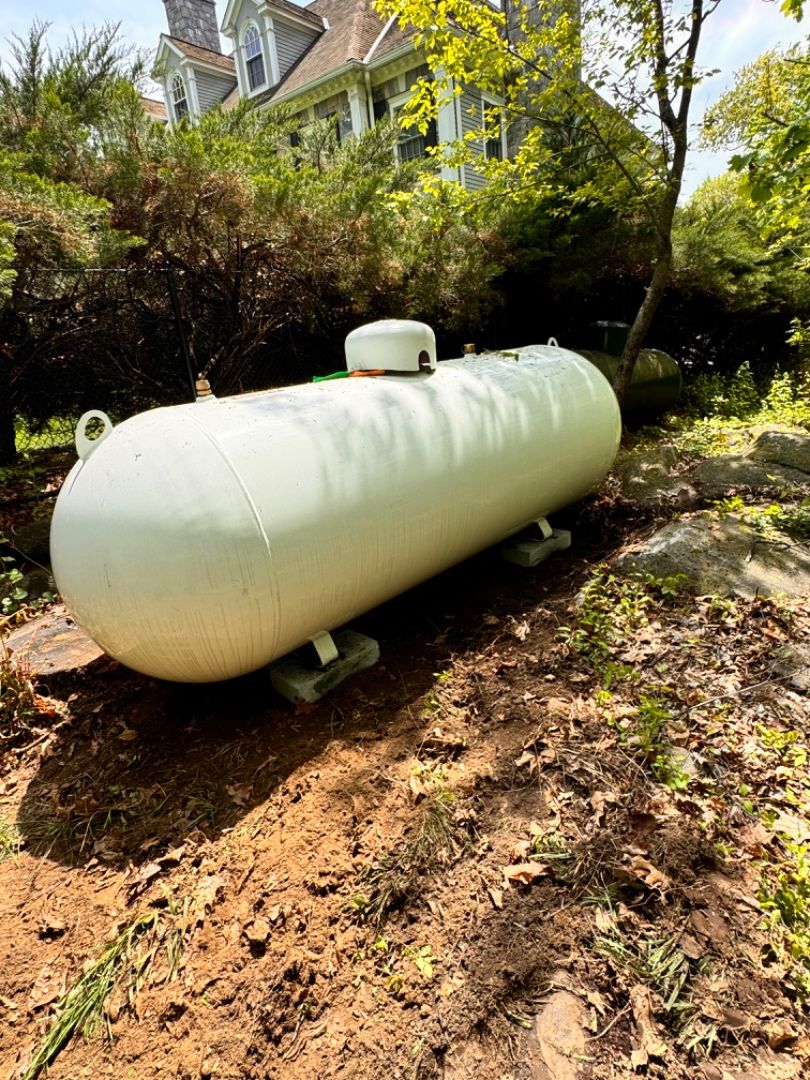
There is no one-size-fits-all propane tank. The best choice depends on what propane will power, how the home uses energy, where a tank can safely sit, and whether you may add equipment later. A 500-gallon tank is common for whole-home heating, while smaller tanks can make sense for a limited appliance load and larger capacity may suit a home with more propane equipment.
Levco starts with a conversation about your plans. Our photo-based process and years of experience usually let a Comfort Advisor recommend practical options and prepare a written quote without an initial visit. We arrange a site visit when the details require one or you request one.
Common residential propane tank sizes
A quick starting point before a Comfort Advisor reviews your home and equipment.
| Tank size | Often considered for | What to keep in mind |
|---|---|---|
| 20 lb cylinder | Grills and portable outdoor equipment | Portable and commonly exchanged |
| 100 lb cylinder | A limited appliance load | More frequent handling than a fixed tank |
| 120 gallon | A few propane appliances | Compact, upright installation |
| 250 gallon | Several appliances or a smaller heating load | Available in above-ground and underground configurations |
| 500 gallon | Whole-home heat with other propane appliances | A common residential starting point in Connecticut |
| 1,000 gallon | Larger loads or several major propane uses | Needs more space and careful site planning |
Tank names describe total capacity. Because propane needs room to expand, the amount delivered into the tank is lower than the number in its name.
How we recommend a tank size
We size the complete propane setup, not one appliance in isolation.
A Comfort Advisor will look at:
- Major loads such as home heating and pool heating
- Water heating, cooking, fireplaces, and other propane equipment
- The home's size, layout, insulation, and expected use
- Future plans that could change the home's total propane use
- Space on the property and safe access for installation and delivery
- Whether an above-ground or underground tank makes more sense
Start with the biggest loads
Above-ground or underground?
Both can work well. The property and the homeowner's priorities guide the choice.
Above-ground tanks
Above-ground tanks require less site work and remain easy to inspect and service. Levco plans the location around required clearances, delivery access, snow, roof runoff, and how the tank will sit within the property.
Underground tanks
An underground tank keeps most of the equipment out of view, with an access dome left above grade. Site conditions, drainage, anchoring, corrosion protection, and future service access all become part of the plan.
Clear photos of the proposed location and access route are usually enough for Levco to develop written options. We arrange a site visit only when measurements, access, or site conditions need a closer look, or when you request one.
Propane tank clearances and safe placement
Useful planning distances help narrow the options before Levco confirms the final location.
Clearance depends on tank capacity, whether it is above or below ground, and the details of the property. As common planning examples, a 120-gallon tank may need different separation than a 250- or 500-gallon tank. We check the distance to the house and a neighboring property line that could be built on, plus windows, doors, crawl-space openings, vents, and ignition sources.
Homes and property lines
A common above-ground 250- or 500-gallon tank is generally planned with at least 10 feet of separation from a building and from an adjoining property line that could be built on. Smaller tanks can follow different rules, and underground tanks have their own placement requirements.
Appliances, openings, and ignition sources
The review also includes windows and doors, mechanical-air intakes, direct-vent openings, air-conditioning equipment, generators, and other potential ignition sources. A 10-foot planning distance is common for several of these conditions, but the tank, appliance, opening, and installation details determine what applies.
Delivery access matters too. The driver needs a safe approach to the tank, and the fill location must work with the driveway, landscaping, gates, slopes, snow, and other site conditions. Underground installations also require additional site planning and a practical location for the access dome.
Levco confirms the applicable requirements for the proposed installation and manages the process from permitting and utility marking through inspection and final approval.
Every property is different
Source: NFPA 58 — Propane container placement is governed by applicable fire-safety requirements and local review.
Why a full tank reads about 80%
That open space is an intentional part of safe propane storage.
Propane expands as its temperature changes. A tank is therefore filled to about 80% of its total capacity, leaving room for expansion. A 500-gallon tank holds about 400 gallons at a full fill; the remaining space is part of the tank's safe operation.
The gauge shows a percentage rather than gallons. Levco's wireless monitoring reads the tank level remotely, while degree-day forecasting adds another layer of information for planning deliveries. The two work together.
What happens after you choose a tank
We keep the planning, installation, fuel delivery, and ongoing care connected.
- Talk through your plans. A Comfort Advisor learns what you want propane to power now and what may be added later.
- Review the property through photos. Our process and experience usually let us prepare written options without asking you to take a day off. Levco arranges a site visit only when the details require one or you request one.
- Compare the right options. Your written quote reflects the tank, placement, gas lines, equipment connections, permits, and site work involved.
- Complete the installation. We coordinate the tank, gas piping, safety checks, required permits, inspections, and initial fuel delivery.
- Stay ahead afterward. Propane customers are enrolled in automatic delivery and wireless monitoring, with preventative maintenance planned as needed.
If you are also comparing tank ownership and leasing, a Comfort Advisor can explain the options that apply to your proposed setup without forcing the decision into a generic online chart.
Ready to discuss the property? Request a propane quote, or learn more about automatic propane delivery.
Common questions
- What size propane tank do I need for my home?
- It depends on the equipment the tank will supply, the home's expected usage, available space, and any future propane plans. A Levco Comfort Advisor reviews those details before recommending a size.
- Why is a propane tank filled to 80%?
- The open space allows liquid propane to expand safely as temperatures change. That means a 500-gallon tank holds about 400 gallons when full.
- Can a propane tank be installed underground?
- Many residential tanks can be installed above ground or underground. The right choice depends on the property, local requirements, access, and the amount of site work involved.
- How is propane tank placement decided?
- Placement must account for the home, property lines, ignition sources, access for delivery, and local fire-code requirements. We review the property and coordinate the required permits and inspections.
- What propane equipment has the biggest effect on tank size?
- Home heating and pool heating are usually the major loads. Water heating, cooking, fireplaces, and other equipment also contribute, so Levco sizes the combined system rather than relying on one appliance alone.
- What happens after a propane tank is installed?
- Levco enrolls propane customers in automatic delivery with wireless monitoring and plans preventative maintenance as needed, helping keep fuel and equipment care organized after installation.
Plan the right propane setup for your home.
Talk with a Levco Comfort Advisor about tank size, placement, installation, and ongoing delivery.
Your next step starts here.
Propane Delivery
Learn about reliable propane delivery and service for heating, hot water, cooking, generators, and more.
Explore Propane DeliveryPropane Tank Options
Above-ground, underground, owned, or leased — we fit your home.
Learn morePropane Safety
Leak signs, shut-off steps, and safe tank practices.
Learn moreRequest a Free Quote
Tell us what you’re considering. We’ll help you understand your options and provide clear pricing with no pressure or obligation.
Request a QuoteHeating Oil Delivery
See how Levco keeps your home supplied with dependable automatic delivery, flexible pricing options, and local support.
Explore Heating Oil DeliveryHeating Service
Get expert repair, maintenance, and replacement support for your home’s heating system.
Explore Heating Service